The Quiet Power of Overlapping Fixtures: How Scheduling Overlaps Between Major Events Create Opportunities in Combined Betting Structures
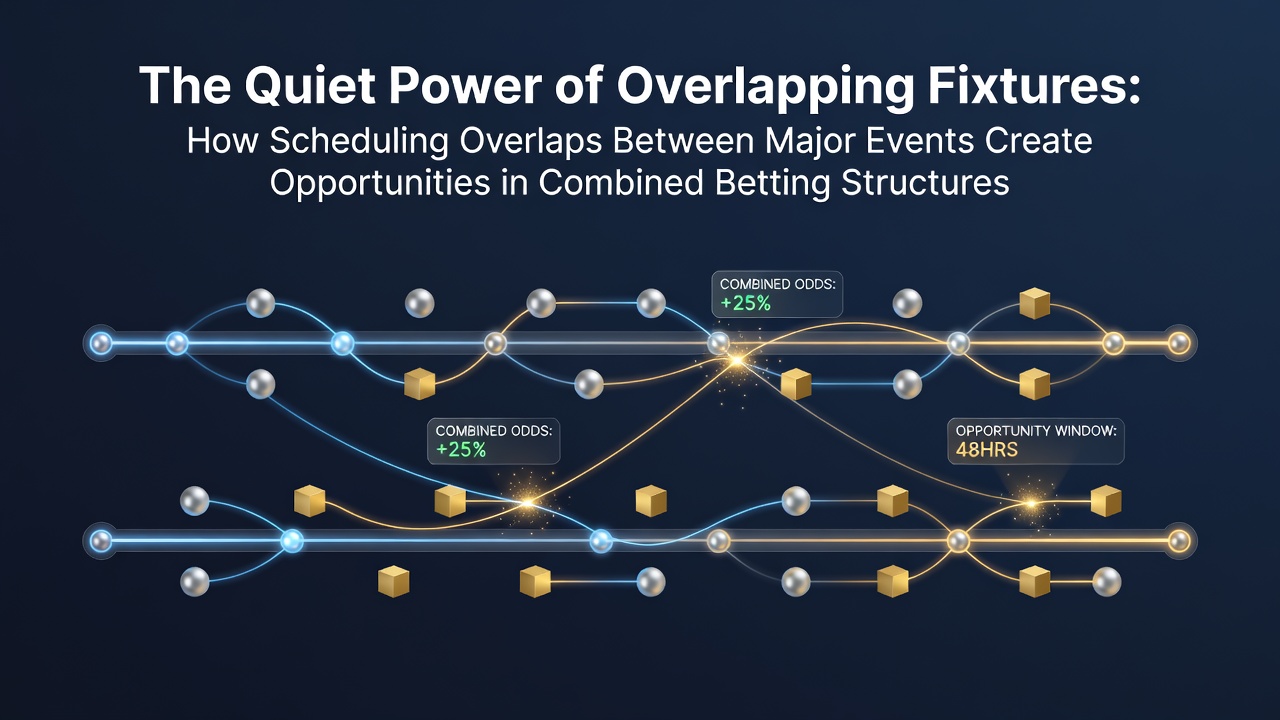
Sports calendars pack multiple high-profile competitions into tight windows, and June 2026 stands out because the FIFA World Cup begins that month while Wimbledon and various basketball leagues maintain their schedules; this convergence produces simultaneous matches across different codes that bettors examine for layered wager constructions.
Understanding Fixture Overlaps in Major Events
Fixture overlaps occur when governing bodies schedule events without full coordination across sports, which means football tournaments, tennis majors, and basketball seasons run concurrently in certain periods; researchers tracking global calendars note that such alignments increase the volume of live markets available at any given moment, allowing participants to combine selections from separate disciplines into single structures.
Data from event databases shows that June typically features at least four major overlapping windows each year, and teh 2026 World Cup opening phase adds further density because group-stage matches occur daily alongside ongoing tennis and basketball fixtures; those who monitor these patterns identify opportunities where odds across unrelated events move independently yet can be paired for balanced exposure.
Mechanics of Combined Betting Structures
Combined betting structures encompass accumulators that link outcomes from multiple sports, arbitrage sequences that exploit price discrepancies, and matched approaches that hedge risk through opposing positions; when fixtures overlap, the simultaneous availability of these markets enables participants to construct positions that respond to developments in one event while another proceeds in parallel.
Industry reports compiled by the Canadian Gaming Association indicate that multi-sport wager volumes rise during periods of fixture density, since bettors gain access to continuous action rather than waiting for single-sport cycles to complete; this continuity supports strategies that distribute stake across several selections without extending the overall settlement timeline.
Case Examples from Recent Overlap Periods
One documented instance involved a European football tournament running alongside the NBA Finals, where morning basketball games and evening football matches created a 12-hour window of overlapping markets; participants constructed accumulators pairing basketball player props with football team totals, and settlement occurred within the same day because the schedules aligned.
Another pattern emerged during Australian Open tennis and domestic basketball leagues, where afternoon tennis sessions and evening basketball tip-offs allowed for intra-day adjustments; observers tracking these sequences report that the staggered start times permitted real-time recalibration of positions based on early results from one sport influencing selections in the next.

Data Patterns Supporting Overlap Strategies
Figures released by the Australian Institute of Sport reveal that multi-code betting activity increases by measurable percentages during known overlap windows, driven by the simple fact that more independent outcomes become available within compressed timeframes; this statistical uplift holds across different jurisdictions and appears tied directly to calendar density rather than promotional activity alone.
Academic analysis from the University of Nevada's gaming research center further demonstrates that price variance between sports tends to remain uncorrelated during overlaps, which reduces the likelihood that movements in one market will automatically mirror those in another; such independence underpins the construction of combined positions that aim for balanced risk across the portfolio.
Regulatory Context Across Regions
Frameworks established by bodies such as the Malta Gaming Authority and various state-level regulators in the United States require clear disclosure of combined product rules, yet they permit operators to offer multi-sport structures provided settlement protocols remain transparent; these guidelines ensure that participants receive consistent information on how overlapping fixtures affect wager resolution timelines.
European trade associations have published position papers noting that fixture overlaps do not alter core responsible-gambling obligations, although they do increase the number of active markets that operators must monitor simultaneously; compliance teams therefore adjust staffing during peak overlap months to maintain oversight across the expanded selection pool.
Conclusion
Calendar overlaps between major events generate a steady supply of concurrent markets that support combined betting structures through increased selection availability and independent price movements; data from multiple regions confirms elevated activity during these windows, while regulatory frameworks maintain consistent standards regardless of schedule density. Those who examine fixture calendars in advance can identify periods such as June 2026 when World Cup matches align with tennis and basketball schedules, creating the conditions under which multi-sport positions become feasible within compressed timeframes.